E-commerce for Digital Game Keys - Argentine Market
Codigo Belgrano
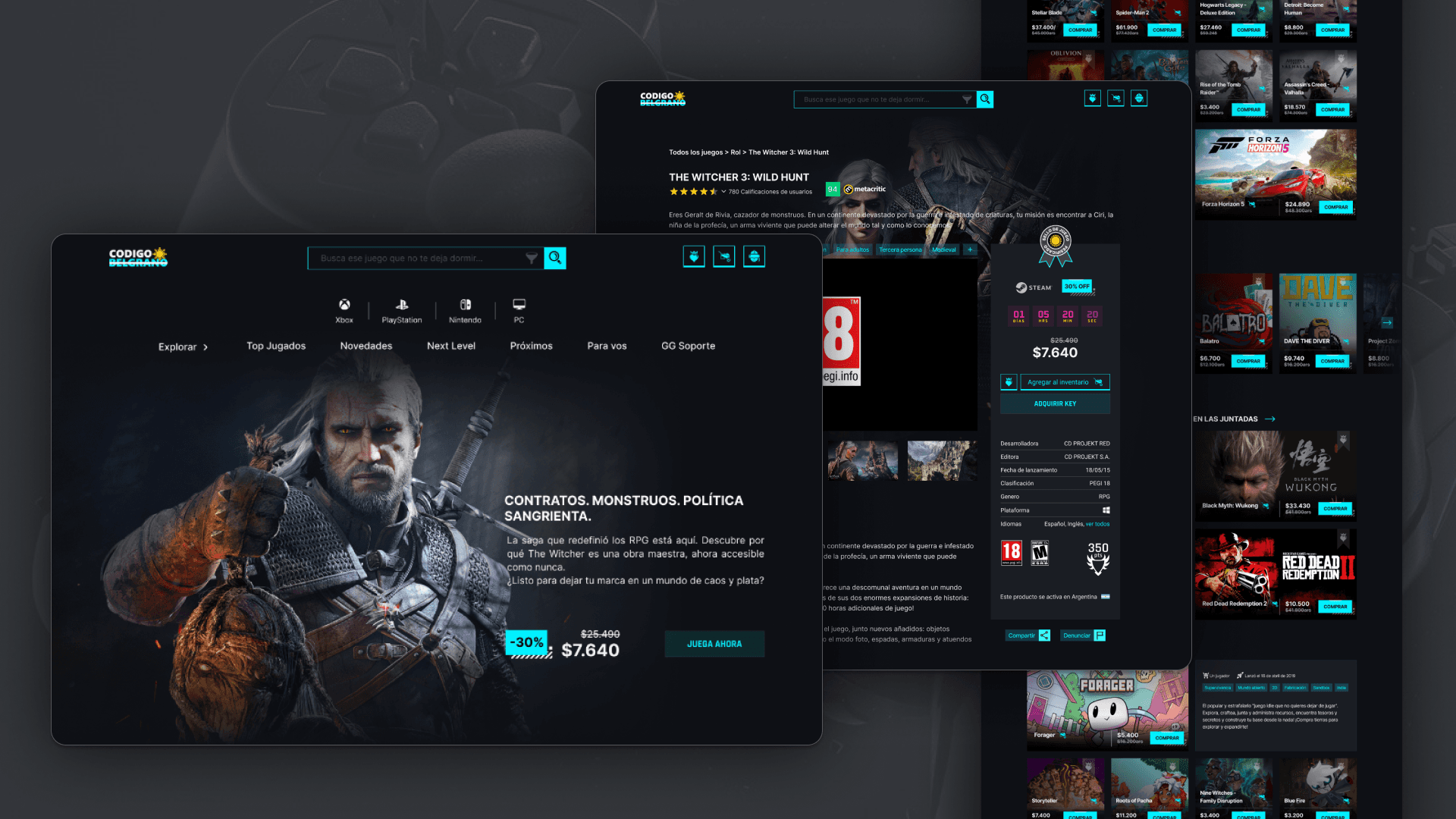
A fictional e-commerce platform designed to sell digital game keys with a glitch-tech aesthetic and Argentine identity. The project explores how to build trust in digital product sales while connecting with local gamer culture through pricing transparency, patriotic visual language, and a narrative-driven shopping experience.
Client
Academic Project - Integrative Course
Date
Sept 2025
Industry
Gaming / E-commerce
Scope of work
Prototyping
UX Research
Competitive Analysis
Prototyping
Competitive Analysis
THE CHALLENGE
How do you design an e-commerce experience that builds trust in digital product sales while authentically connecting with Argentine gamer culture? Digital game key stores face two major challenges in the local market: Trust issues: Users are skeptical about receiving legitimate products after payment Pricing transparency: Dollar-based pricing creates uncertainty and distrust The opportunity: Create a platform that positions itself as 'the Argentine alternative to global stores'—emphasizing local pricing (ARS), cultural identity, and a shopping experience that feels like part of the gamer community, not just a transaction.
UNDERSTANDING THE MARKET
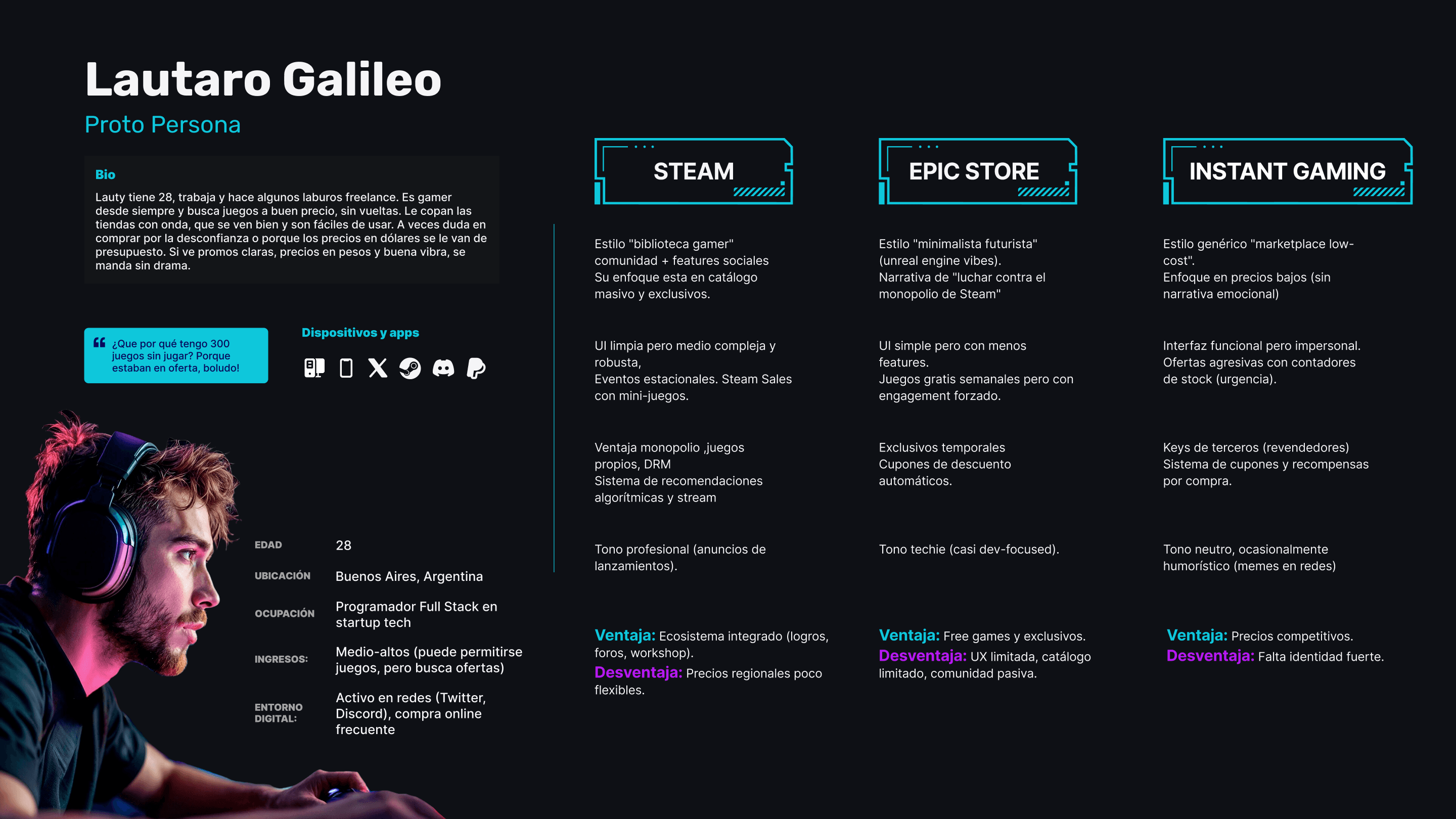
The project began with competitive analysis and user interviews to understand what drives purchase decisions in the Argentine gaming market. Competitive insights: I analyzed Steam, Epic Games Store, and Instant Gaming. Steam dominates with community features, Epic attracts with free exclusives, and Instant Gaming competes on price alone. The gap? None connect authentically with local users or address the trust barrier inherent in digital product purchases.
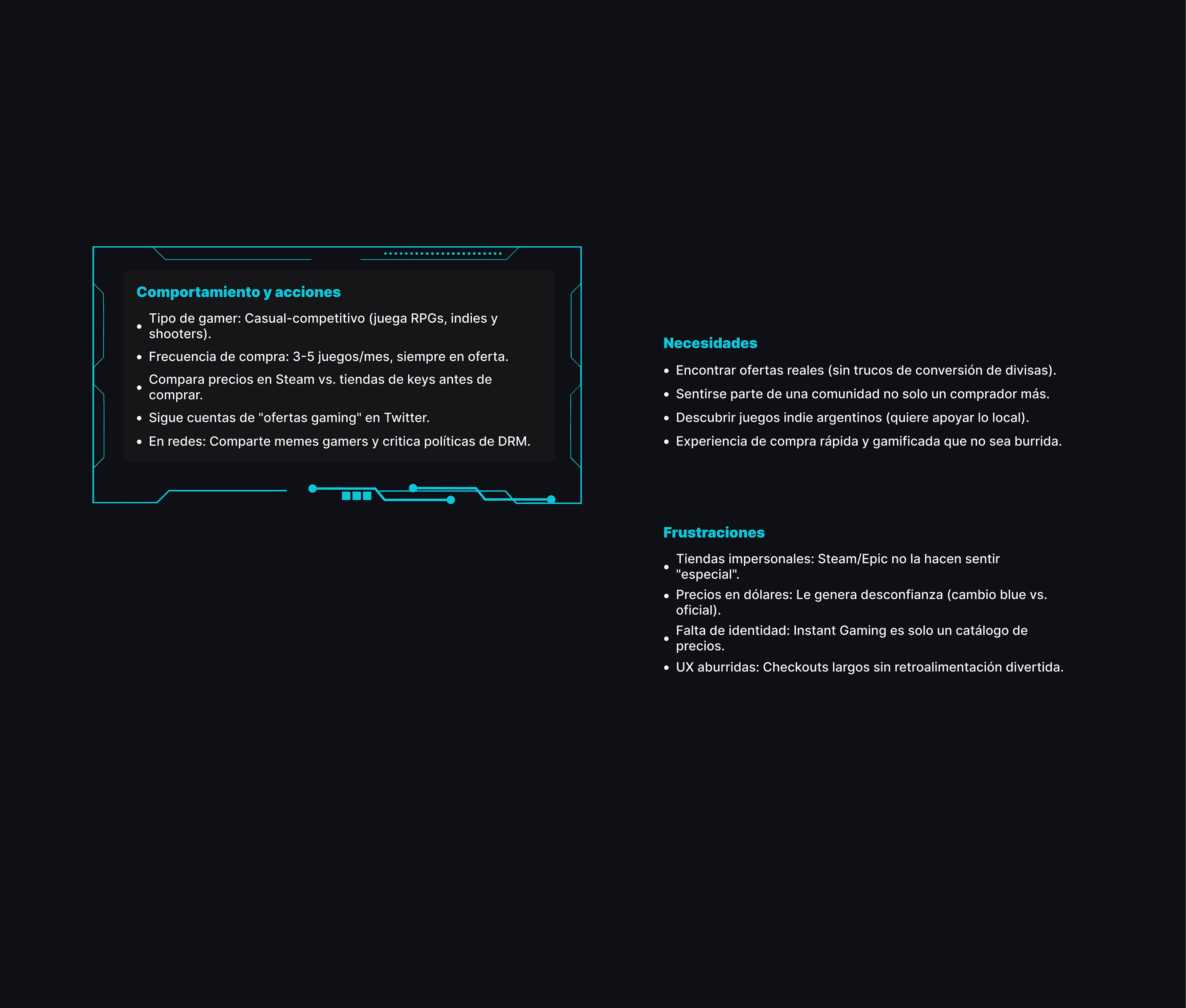
THE PROTO-PERSONA
User patterns: Argentine gamers (16-35) obsessively compare prices before buying, follow deal accounts on social media, and crave transparency. They want local pricing without conversion tricks and a sense of community, not faceless transactions. Lautaro, 28, freelance worker who buys 3-5 games monthly during sales. His pain points: pricing distrust, lack of local identity, boring checkouts. His needs: transparent peso pricing, discovery of Argentine indie games, and a fast, engaging purchase flow.
DESIGN STRATEGY
Código Belgrano needed to stand out in a market dominated by global giants. The design strategy focused on three core pillars that would differentiate the experience. Building trust through transparency: Trust is the biggest barrier in digital purchases. I designed clear trust signals throughout the flow—pricing always in pesos with prominent badges like '100% ARS' and 'Sin VPN', comparative tables showing our prices vs Steam/Epic, local testimonials, and a gamified checkout that awards '+10 Honor Points' for purchases, turning transactions into achievements. Cultural identity as differentiation: The visual language blends glitch-tech cyberpunk with Argentine patriotic elements. It's not subtle—it's intentional. The 'digital resistance' narrative positions buying here as supporting local community over faceless corporations. Tone is informal but respectful, using gamer slang occasionally, with phrases like 'Keys más baratas que el pan en la hiper' (cheaper than bread during hyperinflation)—dark humor that resonates locally.
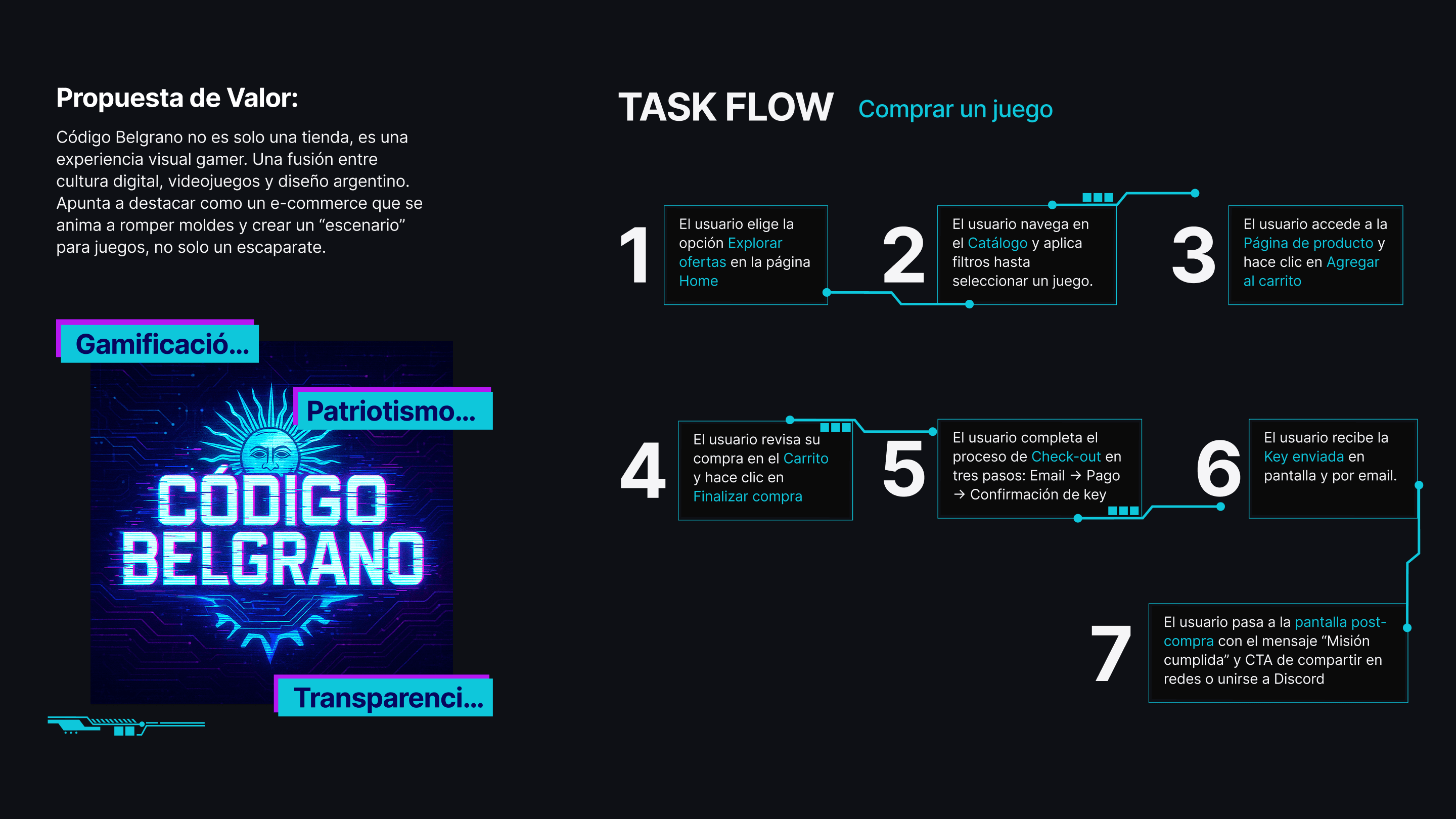
Streamlined purchase flow
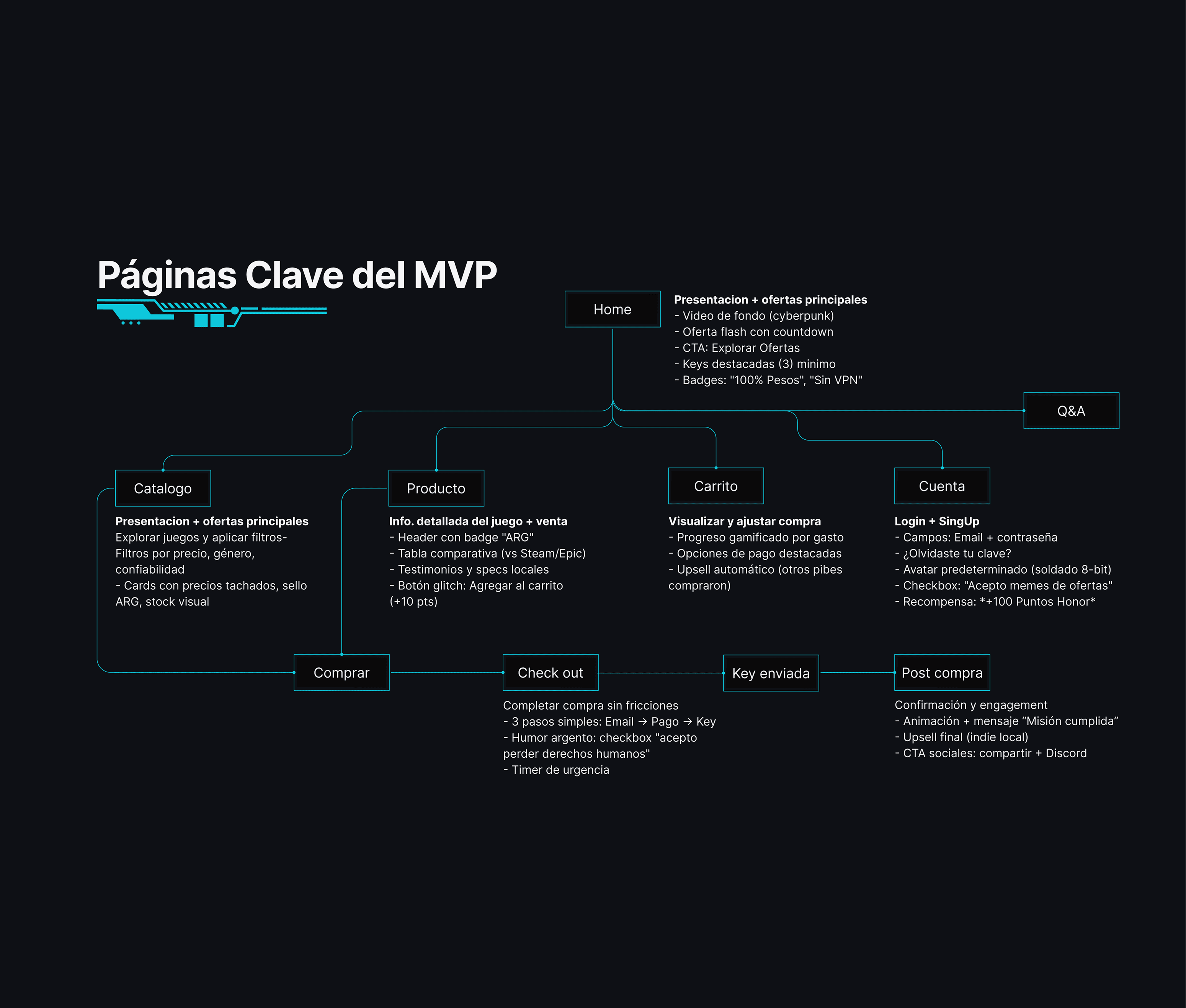
I reduced the purchase journey to its essential steps. Email → Payment → Key delivery, with urgency timers, automatic upsells showing 'other gamers also bought', and a post-purchase screen with mission-complete messaging and social sharing CTAs for Discord. The goal was speed without friction, gamification without annoyance.
OUTCOMES & REFLECTIONS
This was an academic project exploring market positioning and visual identity in a competitive space. While it wasn't validated with real users or implemented, it served as a comprehensive exercise in strategic design thinking. What I learned: Trust isn't just visual, it's structural. Badges and testimonials help, but the real trust-building happens in the information architecture—clear pricing, transparent processes, and reducing cognitive load at every decision point. Local identity is a design decision, not decoration. The Argentine positioning wasn't cosmetic. It shaped copywriting, pricing strategy, humor, iconography, and even the gamification language. Authenticity requires commitment at every layer. Designing for emotional resonance matters. The 'digital resistance' narrative wasn't necessary for functionality, but it gave the brand a reason to exist beyond 'cheaper games.' In saturated markets, emotional differentiation might be more valuable than feature differentiation.